Showing posts with label science. Show all posts

Wednesday, August 5, 2026

Harmonizing Science with the Bible


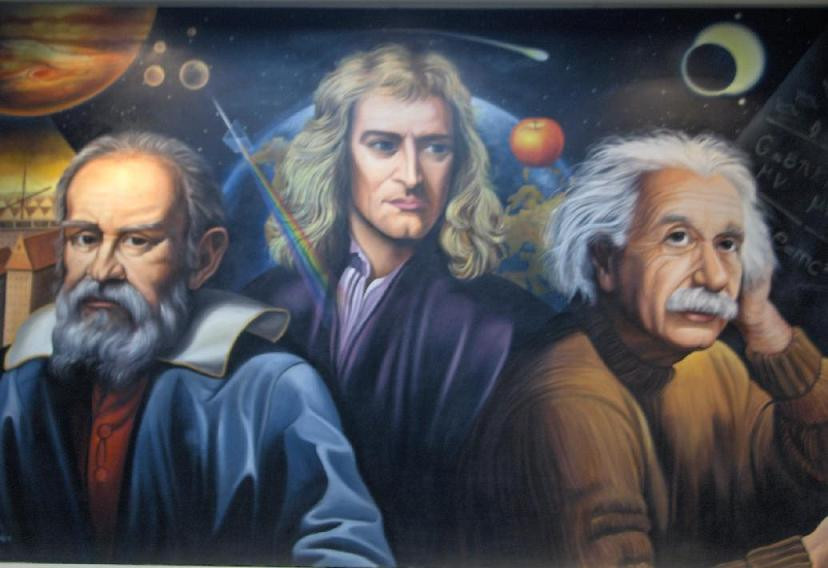
Some of the greatest scientists in the past several centuries devoutly believed the Bible. We’re talking about Tycho Brahe, Galileo Galilei, Sir Isaac Newton, Nicolaus Copernicus, Johannes Kepler, and others.

On November 11, 1572 Danish astronomer Tycho Brahe observed with his naked eye a supernova, now called Tycho’s supernova, that has since been measured at 8000-9000 light years away. This was not a fluke. He was an astronomer; he observed the sky nearly every night and wrote down his observations and drew star charts. So when he saw a new, bright star in a space that had previously been dark, and it wasn't moving like a meteor, he recorded it. His work influenced Johannes Kepler. Brahe famously remarked about his work: “Those who study the stars have God for a teacher.


 Sir Isaac Newton studied the Bible diligently. While he is famous for the scientific principle, “Every action has an equal and opposite reaction,” some of his lesser known quotes include: “Atheism is so senseless. When I look at the solar system, I see the earth at the right distance from the sun to receive the proper amounts of heat and light. This did not happen by chance.” He also wrote: “In the absence of any other proof, the thumb alone would convince me of God's existence.”

Galileo believed that both nature and the Bible were the word of God. “The laws of nature are written by the hand of God in the language of mathematics,” he said. He also said: “Holy Scripture could never lie or err...its decrees are of absolute and inviolable truth.” So where nature seemed to contradict scripture, it was a person’s own understanding that was at fault. He said this in the context of the Catholic Church’s insistence that the earth was at the center of the universe; a belief not based on the Bible, but based on the teachings of Aristotle.

The church had tried for centuries to paint its own meaning onto scriptural accounts to prove Aristotle was right. For example, when Joshua and his army needed more light to defeat their enemies, and he prayed to Jehovah for the sun to stand still, “the sun stood still and the moon did not move until the nation could take vengeance on its enemies … The sun stood still in the middle of the sky and did not hasten to set for about a whole day. There has never been a day like that one, either before it or after it.” (Joshua 10:13, 14)

The Church claimed that verse proved the earth was at the center, and the sun and moon revolved around it. When Galileo and others finally proved that the earth revolves around the sun, did that prove the Bible wrong? Not at all.

The account in the book of Joshua relates what happened from Joshua’s perspective. It is not to be taken as a scientific explanation of what happened with the earth or the solar system.

The earth is spinning at over 1,000 miles per hour at the equator. If it suddenly stopped… think about the last time you had an emergency while driving and had to slam on your brakes. Everything not strapped down slid toward the dash. And that was only at 40 or 50 miles an hour. Imagine that deceleration happening all over the globe. Even if that didn’t happen, imagine the extra heat that would have been generated on the side of Earth facing the sun. Millions of creatures, including people, likely would have died. Imagine the long stretch of darkness that would have to have happened on the side of the globe away from the sun. Why would Jehovah have put the entire planet through all that for the sake of one comparatively small event in the Middle East?

Jehovah could have and no doubt did answer Joshua’s prayer far more easily. The simplest solution would have been to create a bright, temporary light over the battlefield that, to the people below, resembled the sun.

Galileo’s conclusion was that the Bible wasn’t wrong. Rather, the Church’s doctrine was. It was not consistent with either science or the Bible.

Galileo, Sir Isaac Newton, and others completely built or rebuilt scientific rules and principles while adhering to the Bible.

Yet scientists of today, who are not and never will be the next Newton, Galileo or Brahe, push the Bible away. Einstein was an agnostic, but he at least respected much of the Bible. Stephen Hawking wouldn’t even go that far. He flatly said, “There is no god. I am an atheist.” In his view, science had explained everything in the universe in ways that made God unnecessary.

Scientific principles and rules, however, many discovered relatively recently or just in the past few centuries, are not at odds with the Bible.

The majority of scientists today, while having far less understanding of the theories of the universe than Hawking, are atheists. If they started out believing in a creator, their education has stressed to them that the Bible is unscientific, a fable, a myth; and expressing belief in it makes a person a kook.

Many Bible-believers, on the other hand, have been told to view science as a tool of Satan. Any scientific conclusion that disagrees with their understanding of the Bible has to be false.

The louder those people get, the more scientists believe that being a Bible believer is synonymous with being ignorant. In this series we will look at what some Bible accounts actually say, to see if we can separate fact from dogma. 

 Please feel free to leave a comment. To read another of my columns on science, click here. 


Bill K. Underwood is a columnist and author of several books. You can help support this site by clicking on this link to purchase one of his books at Amazon.com.

Thursday, January 25, 2018

You Need to Understand Radio-carbon Dating


Even if you're sure science is the bad guy, you need to understand Carbon-14 dating. 
 
Last week I read this in an Israeli newspaper:

“A massive tower that defended [Jerusalem’s] main water source – which was thought to have been built in the Middle Bronze Age, nearly 4,000 years ago – [Carbon dating results] have shown the structure likely dates back only to the ninth century B.C.E.”

Many fields of science rely on carbon dating. Archaeologists in particular count on it to help them determine the age of many of the artifacts they dig up. 
What is it? How does it work?
At this moment, powerful cosmic particles from somewhere out in the Milky Way are striking Earth’s upper atmosphere. They combine with nitrogen atoms to form unstable Carbon 14 atoms – unstable in the sense that the C-14 atoms slowly decay back to nitrogen.
The C-14 and more stable C-12 carbon atoms combine with oxygen atoms to form carbon dioxide. The ratio between the two types of carbon dioxide is - currently - one trillion to 1.
Both types of carbon dioxide are breathed in by living plants. Animals, of course, don't directly take in C-14; they breathe in oxygen and breathe out carbon dioxide. However, animals do collect C-12 and C-14 when they eat the plants. So animals and humans, like plants, are assumed to have the same one trillion to 1 ratio of C-12 to C-14. Obviously, rocks cannot be measured by a carbon clock since they don't breathe.
The archaeologists in Jerusalem in the article cited above had to have dated some piece of wood they found, not the stones the tower is built from. It was the piece of wood, or technically, the death of the tree the wood came from, that dated to King David’s day, not the stone tower.
When a plant or animal dies, it stops taking in carbon dioxide. It is assumed that the C-12 remains stable for the rest of eternity, but the no-longer-breathing plant's C-14 begins to decay.
It is assumed that all plants take in C-12 and C-14 in the same amounts and with the same ratio. It is further assumed that the ratio has remained constant; that is, that a plant living, say, 6000 years ago took up one C-14 atom to every one trillion C-12 atoms, just as plants do today.
The rate of decay – that is, the rate at which C-14 decays to nitrogen – is currently measured at one half gone in 5,700 years. It's called a "half-life". And it is assumed that the rate has always been the same. So if you were to analyze a sample of 100 trillion carbon atoms from a modern plant, 100 of them would be C-14 atoms. If you looked at 100 trillion atoms of a 5,700 year-old plant you would only count fifty C-14 atoms – half the original amount. 100 trillion atoms from a plant 11,400 years old would have only twenty-five C-14 atoms, and so on.
Simple, right? The lower the amount of C-14, the older the sample. Given all that, any sample more than a few thousand years old will have a microscopically small amount of C-14... one might even say an "immeasurably small amount." And, of course, when you are measuring things in atoms, the samples (and the machinery) are subject to contamination.
According to radiocarbon.com, scientists use oxalic acid made from sugar beets known to have been harvested in 1955 to calibrate their tests. They also use wood from a tree known to have been cut in 1890, “unaffected by fossil fuel effects.”
Wait: What?
Yup. Turns out that changes to the atmosphere mess with the carbon levels. Scientists assume that, prior to the fossil fuel age there were no significant changes to the atmosphere. That explains that reference to the ‘1955 sugar beet oxalic acid,’ as well: atmospheric testing of hydrogen bombs in the nineteen fifties significantly altered the levels of C-12 and C-14 in the atmosphere.
Notice all the assumptions involved: For the carbon clock to be reliable, the amount of the mysterious cosmic rays striking the atmosphere from the unknown space source would have to have remained constant over tens of thousands of years. Have they? Scientists admit they know little about them.
In addition, cosmic rays are greatly affected by magnetic fields – both those of the earth and of the sun. The magnetic fields, in fact, are the reason scientists can only say the cosmic rays come from 'somewhere in the galaxy' – because each magnetic field they pass on their way to Earth changes their direction and their intensity
      - continues below -
If you or someone you know is struggling to support a pioneer lifestyle, maybe this will help: "99 Ways to Fire Your Boss" is a huge collection of income ideas, plus powerful suggestions for living a simpler life! Look for it on Amazon.com
Earth's magnetic field fluctuates dramatically. The sun’s does as well.
Let’s take it a step further. For much of Earth's geologic history a dense shroud of water, dust and other debris covered the planet. Would this have affected cosmic rays striking the atmosphere? Absolutely. Would that have altered the relative amounts of nitrogen, oxygen, and carbon dioxide in the atmosphere? Again, yes.
According to science, atmospheric oxygen is believed to have been as low as 15%, and as high as 35%, at various points in geologic history. The nitrogen level went down when oxygen went up, and vice versa. Carbon dioxide levels changed nearly every time a volcano erupted. When humans began cooking and heating with fire (6,000 years ago according to the Bible, or 350,000 years ago according to science) carbon dioxide climbed. When we began using fossil fuels, CO2 really jumped. And atmospheric testing of nuclear weapons in the 1950s hugely affected levels of C-14 in the atmosphere.
So how can anyone say that the ratio of C-14 to C-12 in a plant living today is the same as the ratio in a plant that lived thousands of years ago?
The scientists themselves, who lean so heavily on the radiocarbon clock, need to read the work of other scientists:
  • A large and sudden increase in radiocarbon around AD 773 is documented in coral skeletons from the South China Sea…forming a spike of 45% in late spring, followed by two smaller spikes. The carbon anomalies coincide with an historic comet collision with the Earth's atmosphere on 17 January AD 773.” – Nature.com
  • “We find [in annual rings of Japanese cedar trees] a rapid increase of about 12% in the C-14 content from a.d. 774 to 775, which is about 20 times larger than the change attributed to ordinary solar modulation.” – Nature, June 2012
  • “The rate of carbon 14 radioactive decay may have been different in the past. The amount of carbon dioxide in the atmosphere may have been different in the past. The assumption of a constant ratio of C-14 to C-12 is invalid; equilibrium would require about 30,000 years, (or 50,000 years according to this mathematician) and the C-14/C-12 ratio appears to be increasing still.” – Tufts.edu
That last part there, about “equilibrium,” is important: If all the assumptions are true, then 30,000-50,000 years after the C-14 process began, whenever that was, the atmosphere should have reached a point where the C-14 decaying away equals the rate at which it is being generated. Otherwise, by now we’d be swimming in C-14.
But it is still increasing. Which can ONLY mean:
  1. The C-14 process – cosmic rays reaching the atmosphere, the atmosphere always containing the present-day levels of nitrogen, oxygen, and CO2, the C-14 being absorbed by plants then decaying out, etc. – that process began less than 30,000 years ago… or
  2. The theory on which Carbon 14 dating is based, is just wrong
Please leave a respectful comment. (Comments are moderated, so if you're a troll or a salesman, don't bother.) To read another of my columns about science versus the Bible, click here. 
Check out my latest novel:
 
Bill K. Underwood is the author of several novels and one non-fiction self-help book, all available at Amazon.com. You can help support this page by purchasing one of his books.