Showing posts with label signs of the times. Show all posts

Saturday, April 25, 2020

Does the pandemic signal the end of the world?


My home lot is small. My neighbors are very close by. This time of year, people are in their yards or have their windows open. Their conversation on an afternoon during the Coronavirus pandemic went like this: 

“This is the end, no question." 
"We’re at the apocalypse."
"They aren’t going to fix this, I don’t care what they promise."

The others agreed. No one argued. No one said, ‘Oh, we’ve seen worse.’ No one said, ‘It won’t come in my lifetime.’  

Are they right? Is Coronavirus the end? Is it a punishment from God, a biblical plague, to be followed in short order by darkness, hail, locusts, and the oceans turning to blood? 
 
The short answer is, No. 

But does that mean the Coronavirus pandemic has no biblical significance? Not at all. It would be very unwise to ignore it.  

Coronavirus is absolutely not, as a born-again man tried to tell me when it began, a punishment from God, being visited on the wicked like those Chinese destroying ‘Christian’ churches. (He later contracted the disease himself...) God simply doesn’t work that way. Long ago, Abraham said to God: 
“It is unthinkable that you would act in this manner by putting the righteous man to death with the wicked one so that the outcome for the righteous man and the wicked is the same! It is unthinkable of you. Will the Judge of all the earth not do what is right?” (Genesis 18:25)
It was a rhetorical question; of course the Judge of all the earth will always do what is right. 

So if the Bible does not teach that the pandemic is a punishment from God, does it explain why random people are dying while others are surviving unscathed? Yes it does: 
 “The swift do not always win the race, nor do the mighty win the battle, nor do the wise always have the food, nor do the intelligent always have the riches, nor do those with knowledge always have success, because time and unexpected events overtake them all.” (Ecclesiastes 9:11)
Unexpected events.” There is no fate; no one is destined to die from the latest virus. It is more likely to kill those with weakened immune systems. But it isn’t a death sentence for the human race. Millions of people have survived it so far, and millions more will come in contact with it or some new plague; and some will survive while others die. The ‘mighty don’t always win the battle.’   
 
There are, in fact, things you can do to improve your chances of survival.

Adam’s and Eve’s bodies were wonderfully made by their creator with multiple lines of defense against disease. But with each generation we get further and further from that perfect start. On top of that, within one century we went from virtually everyone eating farm-fresh organic food, breathing clean air, drinking clean water, and staying physically active all day - to a generation that sits in front of a computer all day and thinks mac-n-cheese and ‘Impossible burger’ are actually foods. 

If you’re a health nut who buys organic food, filters your water, filters the air in your house and walks two miles a day, you still won’t live forever. We all inherited death from Adam. But whose chances of warding off a virus are better: the health nut, or an overweight smoker living on Diet Coke and pop-tarts? 

We’ve come, in one century, from a generation that took responsibility for their own health, to a ‘herd mentality’ that thinks we’re all going to die if science doesn’t come up with a solution.

If the health department, so called, was really interested in saving as many as possible, it seems like their message should be: 'Build your immune system! Get more sunshine, keep moving, get plenty of rest, take vitamins C and D and E, eat fresh food, and don’t stress!' If everyone did some or most of these things, everyone’s immune system would improve a little, and far fewer people overall would be in danger from a virus.

Is the latest pandemic the end of the world? No. There have been many plagues down through history. But that is not the point. Jesus said the last days would be marked by wars, “great earthquakes, and in one place after another food shortages and pestilences.” (Luke 21:10, 11)

In the war between Napoleon and Wellington – sometimes called the Peninsular War, in the early 1800s – many wondered if it was the end. All those signs were being seen: War, food shortage, pestilence, even great earthquakes. Serious Bible scholars, however, knew it wasn’t the end. How? Because Jesus added, “And this good news of the kingdom will be preached in ALL the inhabited earth, for a witness to ALL nations, and then the end will come.” (Matthew 24:14) Matthew Poole, for example, pointed out that in his day, the 1700s, the gospel had barely reached America, let alone India or Australia, and certainly couldn’t be said to have been preached in every nation. (See Matthew Poole for Mark 13:10)

Today, however, all the pieces of Jesus’ warning sign are in place. Since World War I broke out, the world has been constantly at war; has been bouncing from the Spanish flu to polio to heart disease to Ebola to cancer to AIDS to Coronavirus to Hantavirus; the world has seen food shortages all over Africa and Asia and even in more affluent lands; has endured a barrage of earthquakes in one place after another; and, most significantly, has witnessed the Good News of the Kingdom being preached in literally every nation and language. The most widely translated website on the internet, by a huge margin, is not Google or Facebook; it is jw.org, in over 1,000 languages, and the overriding theme of that website is the good news of the kingdom.

Coronavirus may not be the end of the world. But the end is certainly not waiting for some new sign to be fulfilled before it comes.

Please leave a comment.To read another of my columns on a similar subject, click here.
 
Check out my latest novel:

 
Bill K. Underwood is a columnist, photographer and author of several books available at Amazon.com. You can help support this site by purchasing one of his books. 


Friday, April 17, 2020

Is Food Shortage Next?


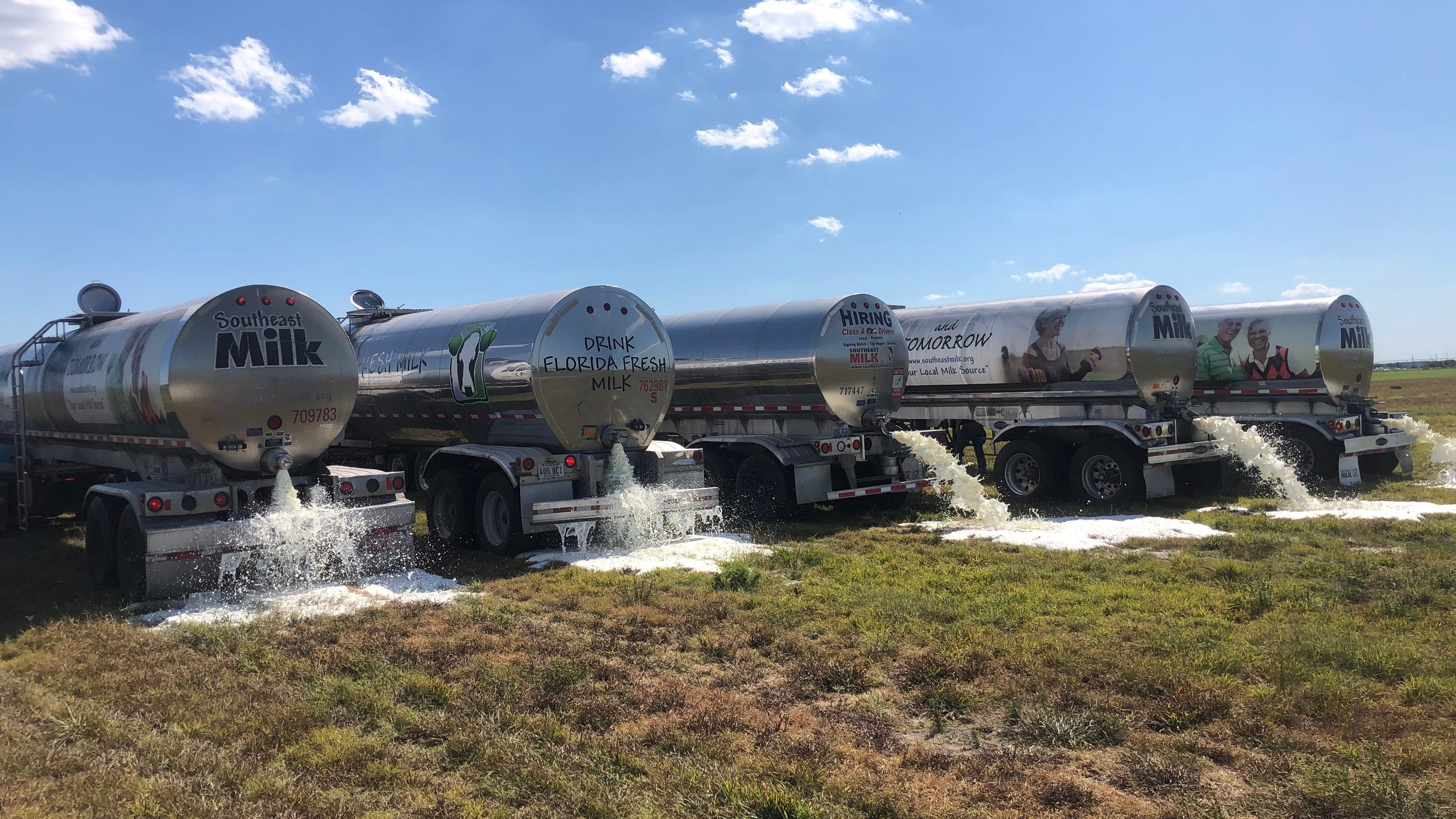
Perhaps you saw, early in the pandemic, some of these stories of dairy farmers dumping milk down the sewer, or vegetable farmers plowing their crops under. Why did that happen? 

Storage is expensive. Cold storage is especially expensive. Over the past few decades, with the help of the almighty computer, supply chains have cut margins to a razor-thin edge. A product goes from its source to its consumer with as short a wait as possible, to save on warehousing costs.

Before the pandemic began, the average American ate out at a restaurant six times a month. 6 meals out of 90 = about 7%. Just because I hate math, let’s round it 5%. So 5% of the food produced in this country is no longer being consumed. “Wait!” I can hear you saying. “People who stop eating out still eat." True. But the farmers who are part of the supply chain for restaurants can't just turn around and sell their food to grocery stores.  

The food at most restaurants doesn't come directly from the farmers. It comes from large restaurant supply corporations, such as Sysco. It comes in restaurant-sized packaging. There is simply no space on grocery store shelves. When restaurants close and stop accepting deliveries from Sysco, Sysco has to tell their farmers, Stop, we don’t have any place to put your produce. What is the farmer supposed to do with it? They operate on tight margins as it is, because Sysco doesn't pay them much. Redirecting their crop to grocery store suppliers would have cost them more than the crop was worth. Some of them couldn't even afford to deliver it to food banks. So they dumped it. 

Now, here’s where it gets tricky. That 5-7% number mentioned earlier; that doesn’t represent every person eating out 6 times a month. Some households eat out nearly every meal. So when the restaurants closed during the pandemic, those households pivoted to eating pre-cooked meals – things like Swanson TV dinners. 

Couldn’t the Swansons of the world take the restaurant’s excess off the hands of the farmers? Eventually, yes. But the switchover took time. The Swanson-type companies already have their own supply chain, and it doesn’t include potatoes prepared to be Red Robin’s signature steak fries.
So closing the restaurants spiked the pre-made meals market. When masked shoppers went to Safeway to stock up on Hungry Man dinners, and that particular case was empty, what do they do? They buy their second choice. 
 
And of course they buy more than they need, "just in case." And the supply chain isn't built to account for that, either.

A section of the population also tried to dust off their cooking skills. When was the last time you baked bread? Early on, when toilet paper was being hoarded, bread was also in short supply in some stores. So people started stocking up on flour and Googling how to bake their own bread. That resulted in a flour and yeast shortage, which drove up prices. The price of hamburger in the meat department rose as well; all these new experimental cookers were more confident in their ability to cook a burger than a roast.

The shortages by and large did not reach starvation levels. But the price per ounce of food definitely rose faster than other parts of the economy. And even after the pandemic was in the rear view mirror, a new virus affecting birds caused farmers to destroy over 23 million chickens. So the price of eggs goes through the roof. News of shortages and sharp spikes in prices of some foods, such as chocolate, have become commonplace. Humans are amazingly adaptable; what causes alarm one day is ho-hum the next.
 
And that is a problem.

Isn’t it interesting that this type of food shortage is exactly what the Bible predicted? Revelation 6:6, in describing the ‘end times’ or last days, said: 
  • “I heard a voice out of the midst of the four living creatures say, ‘A quart of wheat for a day’s wage, three quarts of barley for a day’s wage, and do not harm the olive oil or the wine.’”

In Bible times, as today, wheat was preferable to barley. A quart of wheat would not have been enough for a small family to subsist on, certainly not something you'd want to spend your whole day's wage on. So that heavenly voice was predicting, not necessarily starvation, but at the very least shortages and price gouging, having to make do with what may not be your preference. Olive oil and wine were staples as well. Olive oil was used for everything from lamplight to lotions. The admonition to not harm them would indicate having to take special care to preserve what you have. 

Food shortages alone, or even food shortages accompanying a pandemic, are not proof that we are living in the last days. That’s why Jesus gave a multi-part sign. But what we are seeing should be enough to make a reasonable person investigate further. If you haven’t done so in a while, re-read Matthew 24 & 25, Luke 21, Mark 13, 2 Timothy 3, and Revelation chapter 6.

Click here to read another column about the Sign of the Times. Please feel free to leave a comment.  
 
Check out my latest novel:
 
Bill K. Underwood is a columnist, photographer, and author of several books, available at Amazon.com. You can help support this site by purchasing one of his books.


Monday, April 23, 2018

What will make people say "Peace and Security"?


When Christians discuss where we are in the stream of time, there are certain signs we look for.

The major ones are listed in Matthew 24, Luke 21 and Revelation 6: 
  • Large-scale wars
  • Frequent earthquakes
  • Widespread food shortage, poverty and inflation
  • Pandemics
  • The preaching of the Good News of the Kingdom earth-wide

If you’ve been paying attention, you know you can check all those off your list. But the sign of the times also includes some other details that don’t get as much attention, such as this one: 

"Whenever they begin saying, 'Peace and Security!' then sudden destruction will come on them, as birth-pains on a woman with child; and they will not be able to get away from it." (1Thessalonians 5:3)
The greatest cry of “Peace!” in all history has to have been the elation, the dancing in the streets, that accompanied the end of World War Two, as seen in the famous photo above.

Yet clearly, that event wasn’t what Paul was talking about, since the ‘sudden destruction’ hasn’t happened. It is hard to imagine a war that so dwarfs World War Two that its ending prompts a significantly louder cry of ‘Peace!’ – so loud that everyone knows it is the real fulfillment of the prophecy.

Perhaps the cry of ‘Peace and Security!’ at the end of World War II wasn't the sign simply because all the other signs, particularly the preaching of the Good News worldwide, weren't in place yet. Or, perhaps the cry of 'Peace and Security!' has to be different from merely the end of a war, no matter how great. 
In my novel Resurrection Day I speculated that 1 Thessalonians 5:3 could be fulfilled by a technological advance so great that the majority of mankind felt a personal improvement in their standard of living because of it. This is not unrealistic: we are on the cusp of advances in battery technology, graphene, thorium reactors and other marvels that potentially could, if used correctly, have people sighing with relief, however misguided their trust in that technology. By itself, however, no single whiz-bang invention is going have people declaring an outbreak of peace.

But here’s another thought: What about a different take on "Peace"? In 2018 the United Nations held a special meeting entitled, “A New Approach to Peace.” The agenda was described as peace-building and sustaining peace. They focused on “renewed efforts toward conflict prevention addressing the root causes of conflicts rather than the consequences of conflicts.” The agenda candidly admitted that, in spite of the UN’s best efforts, 
“Violent conflicts in many parts of the world are surging and becoming more complex, deadly and protracted.” There is a “troubling increase in the casualties among innocent civilians that have been the target of direct attacks, as well as unparalleled numbers of displaced populations.”

The United Nations, it said, “needs to adjust its capacities to build and sustain peace. It must engage with Member States long before conflict breaks out and be able to support them at all stages of conflict.”

Their real motivation appeared a couple paragraphs later: “More resources are spent on addressing the aftermath of conflicts than on preventing them from flaring up and escalating.”

One of the most effective ways to motivate someone to do something your way is to show them how it will save them or make them money.

In 2019 the president of El Salvador took a selfie during his speech from the UN's podium, telling the audience that social media had become more effective at bringing people together than any efforts by the UN. Hard to argue with his reasoning.

The UN has been called ‘The World’s Largest Debating Society,’ with good reason. If their success was measured by the number of empty words they’ve produced they would be ranked the most successful organization the world has ever seen. 
 
But what if we look at the UN from a different perspective? 
 
Prior to the 20th century, there was no world peace organization. When a war ended, the victor dictated terms to the loser, and the world moved on. It was only after the horrors of World War One that multiple nations saw the need to sit down together and try to hammer out regulations to keep the peace everywhere, not just in the previously warring countries. That's huge: in all the thousands of years of human history, this peace and security effort is unique. 
 
The original organization, called the League of Nations, comprised 60 nations. It failed significantly when World War II broke out. But it was reorganized when that war ended. Today virtually every government on Earth has joined it. Its ineffectiveness could, theoretically, be fixed. It could, with some minor adjustments, become a very powerful organization, one that is apparently useful, that seems to be actually creating peace and security. You can read my column about what that would require here.

I'm not saying I'd put my faith in it. But as a Christian who carefully watches events to keep track of where we are in the stream of time, I’d be crazy to ignore it.

Please leave a polite comment. (Comments are monitored so, if you have an agenda, don't waste your time.) To read another of my columns on the indicators of the last days, click here.  

Check out my latest novel:
  
Bill K. Underwood is the author of several novels and one non-fiction self-help book, all available at Amazon.com. You can help support this site by purchasing one of his books.

Thursday, July 7, 2016

Are things actually getting better?


“There are Lies, Damned lies, and Statistics.”
Mark Twain attributed that remark to Benjamin Disraeli, but there is no record of Disraeli’s ever having said it. Perhaps it was one of Mark Twain’s ‘lies.’ A commenter on my previous column, however, has made great use of statistics.

"Things have always been this way!"


A 2013 poll asked: ‘Do you feel things are getting better, staying the same, or getting worse?’
Back then, only 42% responded that it was getting worse. 
In a poll of Americans in 2025 that asked the same question, 65% answered that things are getting worse, and only 6% answered that things are getting better.  
 
A commenter on my column about the UN attacking religion said: “The predictions of end times have been going on for 2000 years. The end is eternally nigh. 10,000 years from now, you guys will still be saying it's the end times.”
 
This guy probably doesn’t know it, but he just fulfilled another prophecy about the end times. 
2 Peter 3:3,4 says: 
“In the last days scoffers will come who make a mock at everything--men governed only by their own passions, and asking, "What has become of His promised Return? For from the time our forefathers fell asleep all things continue as they have been ever since the creation of the world."
 The last time I flew, I couldn’t help thinking about the first time I flew…1968, Portland to Honolulu. It was a big deal. I wore my best suit. We walked up to the counter, displayed our tickets, and were ushered onto the plane by a couple of the most gorgeous women I’d ever seen, wearing reassuring smiles and confidence-inspiring Pan Am uniforms. I hung on their every word as they explained how to buckle and adjust the seat belt, and about using the seat cushion as a flotation device in the event of a water landing.
 
There were no x-ray machines, no luggage searches, no metal detectors, no pat downs. There were no announcements about not leaving your bags unattended, no bomb-sniffing dogs; no one asked if I’d packed my bag myself.
 
The last trip was much different. First was all the folderol of getting through security at Sky Harbor… the long zig-zag line, shoes off, belt off, hold your pants up with one hand while taking everything out of your pockets with the other, put your laptop in a separate bin, no liquids more than 3 ounces, all liquids in a separate see-through hold-all… They waved through the guy in front of me who was carrying a 5-foot hickory walking stick with knobs on it. If he was – as I believe – Chuck Norris traveling incognito, he could have used it to take out the entire flight crew and half the passengers. But if I had an 8 ounce bottle of Pepto-Bismol, that was a security risk.
 
But wait, there’s more. Step into the Pro-vision L3 Millimeter Wave Scanner, hands up, (but don’t drop your pants.) My wife’s hearing aid created some sort of alert that prompted a guard to grope her chest while another waived a wand over the back of her head. I waddle over to collect my shoes, belt and flash drive – did I mention my flash drive had to be scanned again? Must be an even bigger threat than the Pepto – then walk barefoot over 50 yards of e coli- and Legionella-infested carpet to get to a bench Homeland Security has thoughtfully provided for humiliated passengers to retie their shoes and try to recover their dignity.
 
During the pre-flight safety briefing, someone remarked that anyone who doesn’t know how to use a seat belt shouldn’t be allowed to fly, and his seatmate replied that (as we were flying from Phoenix to Atlanta) if we had to deal with a water landing we had much bigger issues to think about that using the seat cushion as a flotation device.
 
How did we get to this point? Worse, how did we get to where people seem to think that this is just a temporary inconvenience, or worse still, that this is perfectly normal behavior
Does mankind really think things are going to turn around? Do they think that somehow the terrorist threat will be neutralized? Or that science will come up with a simple, non-intrusive foolproof scanner that will be able to take out the bad guys before they can even come to the airport?
 
Perhaps things are NOT going along ‘exactly as they have been ever since the creation of the world.’
 
In 1956 Dad bought a new Chevy. It featured a handle around the ignition, which was marked ‘Lock, Off, On, Start.’ A person could turn the handle to Lock and remove the key, and that was considered a sufficient theft-deterrent. However, you also had the option to turn the handle to ‘Off,’ remove the key and toss it on the dresser, and start the car with the handle alone, as my folks did for the next two years before trading it in for a new car (something else single-income households can't do anymore, but that's a different discussion.)
 
Which begs the question: Why would GM build a car in 1956 that needed no key? If things are no worse today than they were in 1956 why are cars now built with security systems that rival missile launchers? With features that, if you forget to arm them, will arm themselves? Is it because car manufacturers needed more features to sell? Or is it because the rate of car theft went up?
 
The top disciplinary problems in school in the 1940s and 1950s included chewing gum, running in the halls, and cutting in line. Today that list would include teen pregnancy and sexually transmitted diseases, drug abuse, teacher abuse, mass-shootings, and suicide. Again, does anyone believe these changes are temporary?
 
Medicine has made amazing advances, but people are sicker than ever. Science has figured out ways to triple and quadruple crop yields, but a billion people still go to bed hungry each night. There are more starving people today than there were in the last great famine.
 
And those of us who are not starving are malnourished: we stuff ourselves with nutrient-deficient Big Macs, trans-fat fries, genetically modified soy protein, estrogen-enhanced milk, and hormone-altered chicken nuggets.
 
People's morals have changed. The novel "50 Shades of Grey" was described as 'soft-porn for women', yet it broke sales records. Some reviews of the movie complained that it wasn't raunchy enough. Movies have to keep pushing boundaries if they want to keep selling tickets to an increasingly jaded public. Bumper stickers that used to bear warm fuzzy messages like "visualize whirled peas" have been replaced by slogans such as "Don’t honk, I’m reloading as fast as I can." And unfortunately, there’s more truth than poetry in the latter. Your grandmother’s world didn’t include phrases like “going postal” or “road rage.”
 
If you do not believe these are the last days, how bad do things have to get to convince you?
 

 Check out my latest novel:
 

Bill K. Underwood is a columnist and author of several books. You can help support this site by following the link here to his books on Amazon.com. 

GMOs, gluten, and the poisoning of a planet's food system


Fixing the food supply is not going to be easy. And it’s likely to get worse before it gets better.
The pro-labeling lobbies believe consumers have a right to know what they are putting in their mouths. The anti-labeling lobbies - funded in part by Monsanto - point out that:
  • 70 percent of what we eat in this country is already tainted with GMOs;
  • That, therefore, the ‘Warning: GMOs Inside’ label would be more ubiquitous than, and hence as useless as, the current label that warns ‘this product was made at a plant that also processes peanuts;’
  • And that GMO-free foods are already labeled – with the word “organic.”
But GMO isn’t the whole problem, or even the biggest, and labeling is not the solution. The problem is greedy corporations putting profits ahead of the health of their customers.

Coca Cola sent ‘nutrition experts’ to the 37th Annual Conference & General Meeting of the Nigeria Institute of Food Science and Technology. Nigeria is seeing a rapid rise in obesity, heart disease, gluten intolerance and diabetes. The Coke experts – presumably with a straight face – told the assembled crowd that the increase in diabetes and other non-contagious diseases is a lifestyle issue and has nothing to do with the increased sales of Coke products.

Is the increase in gluten sensitivity a ‘lifestyle issue’? In our last column we pointed out that wheat consumption has gone down significantly in this country over the past century, yet gluten intolerance has gone up!

To continue with our bread story:
 
By the 1920s bread companies were using a flour that had had all the healthy bran and wheat germ stripped away. The remaining starch was bleached with a substance called Agene not only to make it whiter but – because large businesses are always in a hurry – to artificially ‘age’ it so that it worked better with mechanized dough-kneading machines.
The government stepped in midway through the century. Doctors in England had some pretty convincing proof that Agene would kill you, but not before making you crazy. Agene was banned, replaced with plain old chlorine bleach.

The government was also concerned (there’s an oxymoron for you) about the utter lack of nutritive value in the bleached, starchy powder, so it was “enriched”… small amounts of four B vitamins and iron were added. Of course they don’t come close to replacing the vitamins, fiber, magnesium, manganese, zinc, calcium, minerals, phytonutrients and lignans lost in processing healthy wheat into this bleached wallpaper paste. And the “iron” added has about as much nutritional benefit as you’d get by chewing on a nail.

To offer customers ever lighter and fluffier bread the competing bread companies demanded higher gluten varieties from the wheat industry, eventually resulting in a bread that, if it was any less substantial, would have been impossible for the average housewife to cut with a breadknife. But a company called the Continental Baking Company pushed forward anyway. In 1928 they purchased another bread company that had a patent on an automated bread slicer and packager, and Wonder Bread was born.

And now you know where the expression, ‘The greatest thing since sliced bread’ came from.

Wheat farmers, like bread companies, work within the Free Market System. But they have an additional item to consider on their profit-and-loss statement. It’s called The Farm Bill.
 
The free market system determines what I will pay for:
  • Regular bread flour, about 35 to 50 cents a pound,
  • Red fife flour, $1.00 a pound,
  • Kamut flour, $1.25 a pound,
  • Spelt flour, $1.60 a pound, and
  • Einkorn flour, about 2.00 a pound.
So if wheat farmers can make 4 times as much growing health-conscious, non-mainstream wheat, why aren't more farmers jumping on the healthy flour bandwagon? The Farm Bill.
“What’s remarkable and extraordinary about the farm bill is that, at a time of record crop prices and federal deficits, the House overwhelmingly passed a bill to increase subsidies,” said Scott Faber, vice president for governmental affairs at the Environmental Working Group.
It isn't "remarkable" at all. Every one of those politicians who voted for The Farm Bill need money from food monopolies to get re-elected. 
 
You’ve no doubt heard stories of farmers being paid by the government not to farm. Sadly, many of those stories are true - That's part of The Farm Bill. Also true is that farmers are paid higher-than-free-market prices for certain crops.

Thanks to government subsidies a farmer can, for example, get crop insurance for a 60% lower premium than the free market would dictate. But only if he stays in lock-step with the agro-industry: planting government-approved seed and using government-approved methods.

Currently, industrial agriculture uses 2 to 3 times more fertilizer, one and a half times more pesticides and 10 times more energy than a small or heritage crop grown organically.

If a farmer switched from his mainstream crop to a heritage organic crop, he would save money in those 3 areas, while earning a larger profit for his crop. But he’d lose his government aid, have to learn a whole new set of skills, and probably have to purchase a lot of new equipment.

There’s also the likelihood his land is unable to grow anything else without the chemical fertilizer and pesticides. Is he going to be willing to work on soil improvement for years before his new healthier cash crop turns a profit? How many years (if ever) before his land could be certified as organic?

Farmers need to feed their families. It’s a rare farmer who will break ranks with his neighbors and start growing Einkorn, Kamut, Red Fife, Spelt, Emmer, Ethiopian purple, black, yellow, or blue wheat despite demand, and despite higher profits.

For large, conventional, industrial farmers the government provides incentivesbelow-market loans, below-market insurance and a guaranteed market for their crop.
 
For innovative, unconventional, risk-taking, organic farmers the government provides how-to booklets.

You and I can’t fix this. No government program will fix this.

The Bible was eerily accurate when it foretold a time when people would buy "Two pounds of wheat for a day's wages!”(Revelation 6:5, CJB)

According to the World Bank, there are still over 1.2 billion people living on less than $1.25 per day - about enough to buy a couple pounds of wheat. World Bank pats itself on the back because that number has shrunk slightly, but in the US 15 million more people have been added to the ranks of those below the poverty line in the last dozen years.

A few years ago the U.S. came within hours of what Bloomberg News called, “an economic calamity like none the world has ever seen.” Next time it happens, we may all be paying ‘a day’s wage for two pounds of wheat.’ Since the Bible foretold the problem, maybe we should be looking to the Bible for the solution. We'll get to that in the next column.

Please feel free to share this story with all your friends.
 
Check out my latest novel:
  
Bill K. Underwood is a columnist and author of several books. You can help support this site by following this link to Amazon.com.