
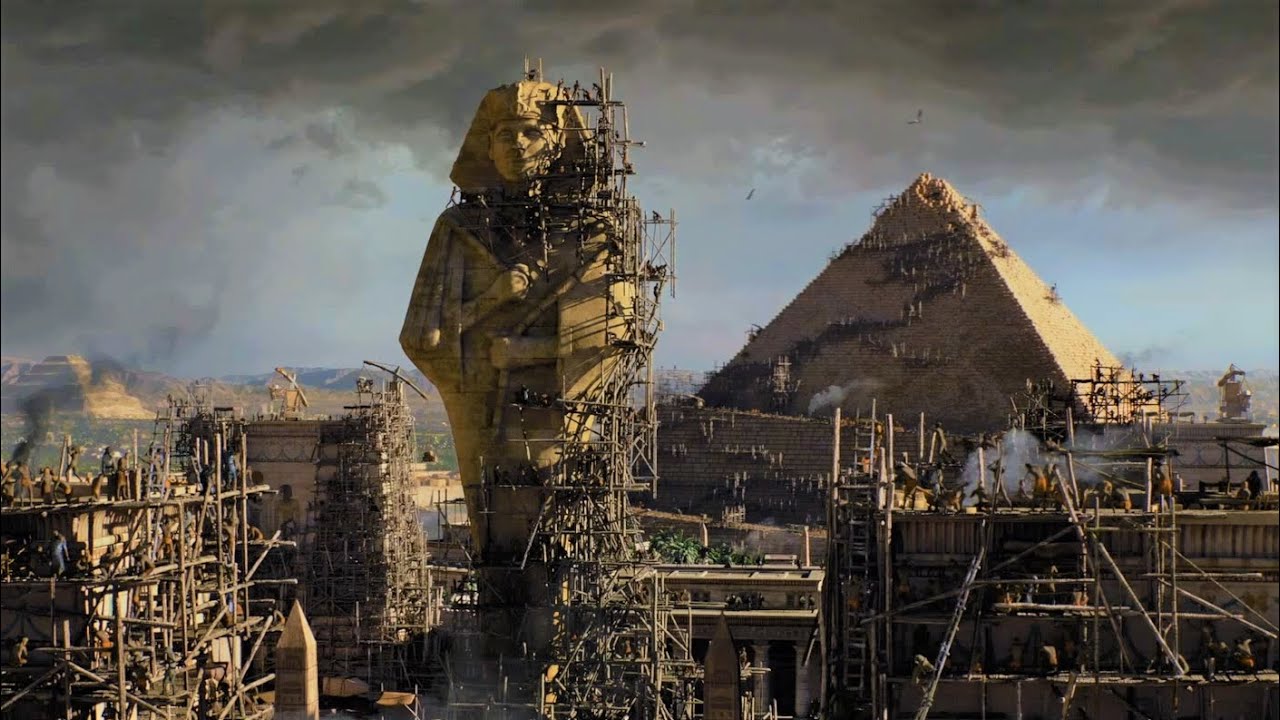
A hundred years ago, the Bible was viewed by most scholars as authoritative history – even by those who were skeptical of its spiritual merits. Clearly, that view has changed.
As we noted in the previous column, any archaeologist or other scholar who says anything positive about the Bible is immediately branded a religious nut.
Should that be the case? How does the historical record in the Bible stack up against other histories? What exactly are these other historical records that scholars rely on?
The alternatives to the Bible for the history of the Middle East are the records of Egypt, Babylon, Assyria, and others. But those records are only crumbs, fragments. It is not as if those countries left libraries full of accurate, concise historical records. For example, regarding Assyrian history, one scholar noted:
“Their main purpose was not to give a connected history of the reign, but simply to list the various conquests for the greater glory of the monarch…they rarely have a chronological order.”
Unlike Generally Accepted Dates, there is no “Generally Accepted History” despite many scholars acting as if there were.
For example: if you Google “ancient Egyptian history” you’ll find almost as many different timelines for Egypt’s pharaohs as you’ll find websites on the subject. According to one, Egypt was first settled about 3,500 B.C.E. But according to another, farmers were plowing the Nile valley by about 5,000 B.C.E. – a disagreement of 1,500 years. And still others claim Egypt was populated 40,000 years ago.
Since there are no reliable records from any of these countries, what is 'known' about them is in actuality simply the ‘best guess’ based on hieroglyphics and stories written long after the fact. There are huge gaps in the records – in some cases, many centuries. The royal scribes were not so much historians as ego-strokers for their mentors. They grossly exaggerated victories and minimized or completely ignored defeats and failures. In many cases they skipped right over unpopular kings. Over and Over archaeologists have proven that many of the stone-carved ‘histories’ are literally carved right over the histories of their predecessors.
And nearly all these timelines include gods, demigods, and myths treated with the same validity as historical figures – somewhat like saying the early presidents of the United States included Pecos Bill, Paul Bunyan, and Santa Claus.
For example, the ‘history’ of Sumer starts out:
“When kingship was lowered from heaven… Alulim became king and ruled 28,800 years…”
The Sumer list includes three other kings who, collectively, ruled for 108,000 years! Such a “history” is of little use to any serious researcher.
While the Bible was not written primarily to be a history book, its message requires a historical presentation of the early nation of Israel. In the process, because of recording Israel’s interactions with Egypt, Assyria and Babylon, it also gives some useful insights into those countries. While some scholars are busy sneering at the Bible, they are nevertheless using it to fill in details that are recorded nowhere else.
The bible also lists all the kings and key figures in the history of biblical Israel, from its beginning - a promise made to Abraham - to its end, when Jesus said, “Your house is now left desolate.” (Matthew 23:38) And it lists them ‘warts and all.’
Instead of painting glowing, exaggerated puff pieces or Paul Bunyan stories, it frankly recounts King Saul’s whining (1 Samuel 15:20, 21), King David’s adultery (2 Samuel 11:4), and King Solomon’s idolatry (1 Kings 11:4)… and those were just the first three kings of Israel! While there are accounts in the Bible that clearly are stories (2 Samuel 12:1-4), there are no mythological figures.
One example of the conflict between biblical history and secular history is the first destruction of the Jewish temple by the Babylonians. The Generally Accepted Date is 587 or 586 B.C.E. If you ask a scholar why that date, you are most likely to get a statement along the order of ‘so-and-so says so.’ In fact, you are more likely to get a blank look - no one questions the dat.
Trace it back to its origin yourself, however, and you’ll find that the G.A.D. of 586 only began showing up in print about a century ago. It is based on a timeline of Babylonian kings written by a Babylonian priest named Berossus who lived centuries after the fact, at about the time of Alexander the Great.
As with the other ‘historical’ records we’ve already referred to, Berossus’ record:
- No longer exists. We have a “Latin translation of an Armenian translation of a lost Greek copy of Eusebius who quotes from Polyhistor who cites Berossus.”
- Starts with Babylon (of course) as the birthplace of mankind.
- Includes an account of a fish that came out of the water by day and stood on two feet like a man, and talked out of a man’s head below its fish-head. Berossus' story also includes minotaurs, centaurs, horses with dogs' heads, and other weird tales.
- Omits several Babylonian kings, some of whom had significant reigns;
- Differs significantly from other records, such as Ptolemy’s canon, as to the length of reign of those kings.
Yet historians treat Berossus' record like it’s the Constitution.

Here’s the problem with the 587/586 date. The date when Cyrus the Great conquered Babylon – 539 B.C.E. – is set in stone. There is no scholarly disagreement about it. It is based not only on Ptolemy’s canon, but also on the histories recorded by Diodorus, Africanus, and Eusebius.
Cyrus freed the Jews within two years after conquering Babylon. If Babylon conquered Jerusalem in 586, that means the Jews were in captivity for only about 48 years.
But the Bible says:
- Jeremiah 25:11, 12 “This whole land shall be a desolation, an astonishment; and these nations shall serve the king of Babylon seventy years. And it will come about, after seventy years are ended, that I will send punishment on the king of Babylon…and I will make it a waste forever.”
- Daniel 9:2 “In the first year of his rule, I, Daniel, saw clearly from the books the number of years given by the word of the Lord to the prophet Jeremiah, in which the making waste of Jerusalem was to be complete, that is, seventy years.”
- 2 Chronicles 36:21 “To fulfill the word of the LORD in the mouth of Jeremiah, until the land had enjoyed its sabbaths. All the days of the desolation it kept the sabbath, to the full measure of seventy years.”
- Zechariah 1:12 "O Yahweh of Armies, how long will you not have mercy on Jerusalem and on the cities of Judah, against which you have had indignation these seventy years?"
So: on the one hand, you have scholars leaning on Berossus the dog-headed-horse storyteller-priest, saying the exile lasted 48 years. On the other hand, you have four different Bible writers saying the exile lasted 70 years.
If we go with 70 years instead of 48, then Jerusalem was destroyed about 607 B.C.E., not 586. Add in the math we did in the previous article, and you push the conquest of Jericho to 1473 B.C.E. and the Exodus back to 1513 B.C.E.
As we said, the Bible is a magnet for Time/Date arguments. According to the Biblical timeline:
- The entire human race came into existence less than 6,100 years ago;
- There was an earth-wide flood about 4,400 years ago, survived by only elderly Noah and his wife, their three sons - Shem, Ham and Japheth – and their wives;
- Mankind had one language until a miraculous multiplication of languages about 4,200 years ago;
- Noah’s sons had children, grandchildren, and great-grandchildren from whom descended those Egyptians, Babylonians, Israelites and, well, everybody else.
Feel free to leave a comment.
Check out my latest novel:

Bill K. Underwood is the author of several books, all available
at Amazon.com. You can help support this site by purchasing one of his books.
The article rests on a faulty premise and builds its conclusions on that foundation.
ReplyDeleteIt dismisses all non-biblical historical evidence by conflating it with ancient mythology, while ignoring verifiable data that can be dated scientifically today: Babylonian chronicles, astronomical tablets (e.g., VAT 4956), administrative records, and modern archaeological stratigraphy. These sources anchor the fall of Jerusalem in 586/587 BCE with precision the article fails to acknowledge.
It misinterprets Scripture. Jeremiah 25 does not state “70 years of total desolation after Jerusalem’s fall.” It states: “these nations will serve the king of Babylon seventy years.” That refers to imperial domination, not total depopulation. This period begins in 605 BCE (Carchemish and Judah’s submission) and ends in 539 BCE (Babylon’s fall). That gives exactly 70 years without altering the date of Jerusalem’s destruction.
It ignores critical biblical context. In Daniel 9:2, Daniel is already in Babylon under Persian rule, meaning the seventy years were already concluding. Daniel does not place those years into the distant future, nor does he ever apply them to a prophetic timeline beyond the immediate historical context. More importantly, no part of Daniel connects these seventy years with a multi-century countdown, and Daniel 4—misused in Adventist/JW chronology—never suggests a period of 2,520 years or relates “seven times” to Jerusalem.
The Bible itself shows there was not seventy years of total emptiness in Judah: a Babylonian governor (Gedaliah) was appointed, cities remained inhabited, and agricultural activity continued after 586. If the land were completely empty, there would be no need for a governor.
The article employs circular reasoning: it rejects established historical chronology because it contradicts a doctrinal interpretation, then uses that contradiction as “proof” that secular history is unreliable.
It claims 586 “only began appearing in print a century ago.” That is incorrect. Sixth-century BCE chronology was established long before Russell or Barbour—rooted in classical sources, later confirmed by astronomy and archaeology. 607 BCE has never been accepted in secular or religious historiography; it persists only to uphold a specific prophetic scheme.
Bottom line:
– 586/587 BCE is supported by robust, independent evidence from multiple disciplines and aligns with the biblical narrative when properly interpreted.
– 607 BCE is supported only by a doctrinal requirement and requires misreading both Jeremiah and Daniel.
When an interpretation must rewrite biblical context and global history to survive, the problem is not with the evidence.
Bill, your argument rests on several incorrect assumptions about both history and the biblical text.
ReplyDeleteSecular chronology is not based on myths
Modern Near Eastern chronology does not rely on Berossus’ legends. It is anchored in:
• Babylonian chronicles
• Administrative tablets
• Astronomical observations (e.g., VAT 4956)
• Archaeological destruction layers
These independent lines of evidence converge on 586/587 BCE for Jerusalem’s fall.
Jeremiah did not say 70 years of total desolation from the fall of Jerusalem
Jeremiah 25:11 says the nations will serve the king of Babylon for 70 years.
That domination began in 605 BCE (Carchemish and Jehoiakim’s submission) and ended in 539 BCE (fall of Babylon).
70 years exactly, without changing the destruction date.
Daniel confirms the 70 years were ending in his lifetime
In Daniel 9:2, Daniel is already in Babylon under Persian rule.
He is not counting forward 2,520 years.
He recognizes Jeremiah’s 70 years were fulfilling then — not centuries later.
There was no 70-year empty land
After 586:
• Gedaliah governed the region
• People remained in cities
• Agriculture continued (Jer 41–43)
Biblical history itself refutes the idea of a fully abandoned Judah for 70 years.
607 BCE was never a recognized historical date
Prior to Russell/Barbour, scholars already placed the fall in the 6th century BCE.
607 exists only to support a prophetic calculation inherited from Millerite Adventism